

Canada's Financial Comparison Guide

Navigating Home Equity Loans and HELOCs in Canada

14 min read Updated Jul 11, 2026
Marie-Claire Dubois

Experte en services bancaires

Expert Fintech

Home equity loans in Canada offer homeowners a powerful way to leverage their property's value. These financial products allow you to borrow against the equity you've built up in your home. While often referred to as "home equity loans," the most common form offered by major Canadian banks is actually a Home Equity Line of Credit (HELOC).

HELOCs provide flexible, revolving credit secured by your home. This means you can borrow, repay, and re-borrow funds as needed, up to your approved credit limit. This flexibility makes them a popular choice for various financial needs, from home renovations to debt consolidation.

Major banks in Canada, including TD, RBC, BMO, Scotiabank, CIBC, and National Bank, all offer HELOCs or similar readvanceable mortgage products. However, they come with strict criteria and regulations, primarily overseen by the Office of the Superintendent of Financial Institutions (OSFI).

It is important to understand that these bank offerings are typically categorized as "A" tier lenders. This usually means they offer the lowest interest rates available, but in return, they impose the most stringent eligibility rules and application processes.

Banks Offering Home Equity Loans (HELOCs) in Canada

When considering a home equity loan or HELOC, Canada's largest banks are often the first point of contact. These institutions dominate the market and provide competitive options for qualified homeowners. Their products are designed to integrate with existing mortgage solutions, often requiring you to hold your primary mortgage with them or switch it over.

Each bank has slightly different names for their products and specific terms. However, the core functionality of a HELOC remains consistent: you gain access to a revolving credit facility secured by your home's equity. This security is what allows for generally lower interest rates compared to unsecured personal loans.

Here’s a closer look at what some of the major Canadian banks offer regarding home equity access:

  • TD Bank: TD provides various cash-out refinancing and home equity options. They are known for competitive rates for borrowers who meet their qualification standards. Their solutions can be tailored for different financial goals.
  • RBC Royal Bank: As Canada's largest bank by assets, RBC offers its popular Homeline Plan. This is a comprehensive HELOC product allowing borrowing up to 65% of your home's loan-to-value (LTV) ratio. RBC also facilitates refinancing options.
  • BMO (Bank of Montreal): BMO delivers HELOCs, though they typically require you to have your primary mortgage with them. This integrated approach simplifies the process for existing BMO mortgage clients.
  • Scotiabank: Scotiabank provides similar HELOC products. Their offerings are competitive, and like many other banks, they often require mortgage portability, meaning you might need to move your existing mortgage to Scotiabank to access their HELOC.
  • CIBC: CIBC offers robust equity access solutions through HELOCs or refinancing. They aim to provide low rates for clients with strong financial profiles, making them an attractive option for well-qualified borrowers.
  • National Bank of Canada: National Bank primarily offers HELOCs to its existing mortgage clients. This focus on existing relationships ensures a streamlined process for their loyal customer base.

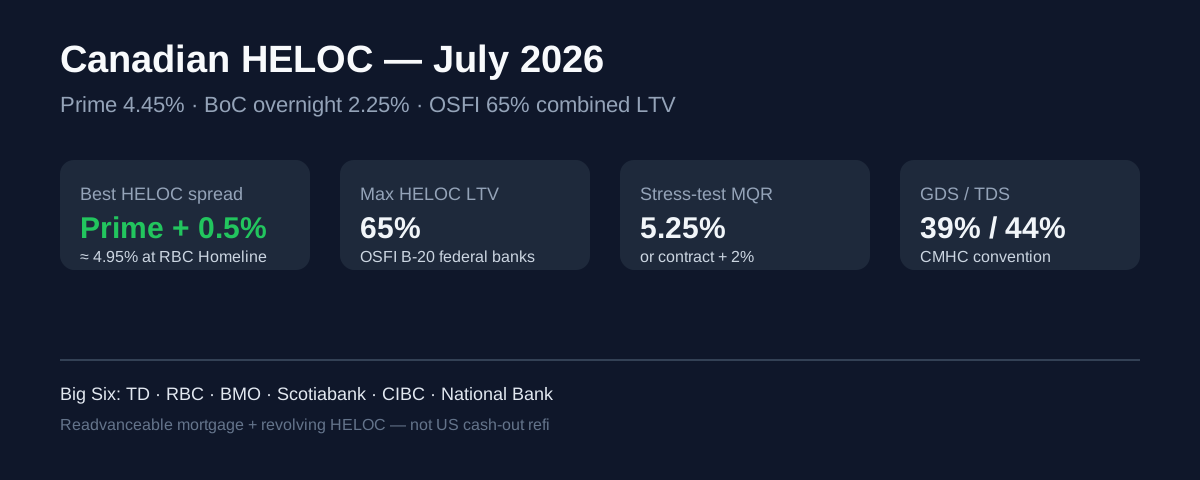
A crucial point to remember is that these major banks typically limit your total combined borrowing (mortgage + HELOC) to 65% of your home's appraised value. This is a conservative approach compared to some private lenders who might offer higher LTVs, but it's a regulatory standard for federally regulated banks.

Eligibility Criteria for Home Equity Loans (HELOCs)

Qualifying for a home equity loan or HELOC from a major Canadian bank involves meeting stringent criteria. These requirements are in place to ensure responsible lending and to protect both the borrower and the financial institution. The core principle is that you must demonstrate sufficient equity in your home and a strong capacity to repay the borrowed funds.

One of the primary requirements is having substantial equity in your property. For a combined mortgage/HELOC, you generally need at least 20% equity. If you are seeking a standalone HELOC, which is less common from major banks, you might need 35% or more equity.

Important
The maximum loan-to-value (LTV) for HELOCs from major Canadian banks is typically capped at 65% of your home's appraised value. Your total debt, including your primary mortgage and the HELOC, cannot exceed this threshold.

Your credit score is a significant factor. For the best rates and easiest approval, a credit score of 680 or higher is generally expected. While some lenders might consider scores as low as 600, higher scores indicate a lower risk and unlock more favourable terms.

Your Debt-to-Income (DTI) ratio is also critically assessed. This ratio compares your monthly debt payments to your gross monthly income. Major banks typically look for a maximum DTI ratio between 40% and 50%. A lower DTI indicates you have more disposable income to manage additional debt.

Lenders require robust proof of income. This typically includes recent pay stubs, T4 slips, and your Notice of Assessment (NOA) from the Canada Revenue Agency. Self-employed individuals will need to provide more comprehensive financial statements and tax filings to demonstrate stable income.

A mandatory component of the application process is the OSFI stress test. This test requires you to prove you can afford your mortgage and HELOC payments at a higher, benchmark interest rate, not just the current contract rate. For example, you might need to qualify at 5.25% or the contract rate plus 2%, whichever is higher. This protects you from potential rate increases.

Finally, lenders will assess your employment stability and payment history. A consistent employment record and a history of making timely payments on all your debts are crucial indicators of your financial reliability.

Interest Rates and Fees for Home Equity Loans (HELOCs)

BankMax LTV (Total)Min EquityTypical Rate (Prime+)Key Notes
TD65-80%20%+0.9%Refinance options strong
RBC65%20%+0.8%Homeline Plan popular
BMO65%20%+0.7%Mortgage tie-in required
Scotiabank65%20%+0.6%Competitive for qualifiers
CIBC65-80%20%+0.9%Flexible refinance
National65%20%+0.7%Existing clients priority
65%
Max LTV for HELOCs from Major Banks
680+
Minimum Credit Score for Best Rates
40-50%
Maximum Debt-to-Income Ratio

Entering July 2026, the estimated Canadian prime rate is holding around 5.20%, reflecting current economic conditions and the Bank of Canada's stance. This stability or slight movement directly impacts the variable rates of HELOCs.

When engaging with a bank, clearly communicate your financial goals for the HELOC. Whether it's for renovations, debt consolidation, or investments, understanding your purpose helps the bank recommend the most suitable product and structure.

Always review the loan agreement thoroughly before signing. Pay close attention to clauses regarding interest rate changes, minimum payment requirements, and any potential penalties for early repayment or closing the line of credit.

BankMax LTV (Total)Min EquityTypical Rate (Prime+)Key Notes
TD65-80%20%+0.5-1%Refinance options strong
RBC65%20%+0.5%Homeline Plan popular
BMO65%20%+0.5-1%Mortgage tie-in required
Scotiabank65%20%+0.5-1%Competitive for qualifiers
CIBC65-80%20%+0.5%Flexible refinance
National65%20%+0.5-1%Existing clients priority

Understanding the costs associated with a home equity loan or HELOC is essential for responsible financial planning. The primary cost is the interest rate, but various fees can also apply. HELOC rates are almost always variable, meaning they fluctuate with the Bank of Canada's prime rate.

Currently, the prime rate in Canada is influenced by the Bank of Canada's overnight rate decisions. As of early 2026 estimates, the prime rate might range from 4.95% to 6.45%. Your HELOC interest rate will be expressed as "prime plus a margin." For top-tier borrowers with excellent credit and financial profiles, the best rates can be as low as Prime +0.5% to Prime +1%. This translates to an estimated range of 5.5% to 7.5% based on current prime rate estimates.

65%
Max LTV for HELOCs from Major Banks
680+
Minimum Credit Score for Best Rates
40-50%
Maximum Debt-to-Income Ratio

Beyond interest, several fees may apply. An appraisal fee, ranging from $300 to $500, is common as the bank needs to determine your home's current market value. Legal fees, which can exceed $1,000, are also typically incurred for property registration and other administrative tasks. If you are switching your mortgage to a new lender to secure a HELOC, you might also face discharge fees from your previous mortgage holder.

However, a significant advantage of HELOCs from major banks is the typical absence of annual fees. This helps keep ongoing costs down, making them more attractive than some credit cards or personal lines of credit that may have annual charges. Banks like RBC and TD often provide the most competitive rates and lowest fees for their "A-client" borrowers.

The Application Process for a Home Equity Loan (HELOC)

Applying for a home equity loan or HELOC involves several structured steps. Understanding this process can help you prepare and navigate it more smoothly. The timeline can vary, but generally, it involves assessment, application, approval, and funding.

The first step is to assess your home equity. You can use online calculators or consult with a mortgage broker or bank representative to get an estimate of how much equity you have available. This initial assessment helps determine your potential borrowing capacity.

Next, you will gather the necessary documents and go through a pre-qualification stage. This usually involves a preliminary credit check and income verification by the bank. This step provides an early indication of your eligibility and helps the bank determine what products might be suitable for you.

Once pre-qualified, you will submit a full application. The bank will then order a professional appraisal of your home to confirm its market value. They will also meticulously verify all the details you’ve provided, including your income, employment, and existing debts. This thorough review ensures compliance with regulatory requirements, including those set by OSFI.

The underwriting process typically takes between two to six weeks. During this period, the bank's underwriters will assess your complete financial profile, including performing the mandatory OSFI stress test. This stress test ensures you can comfortably manage your payments even if interest rates increase significantly.

Upon approval, there will be a legal review. Once all legal documentation is finalized and signed, the funds will be disbursed. This final stage involves securing the HELOC against your property title, after which the credit line becomes accessible to you.

Required Documents for Your HELOC Application

Preparing the necessary documentation in advance can significantly speed up your home equity loan or HELOC application. Lenders require comprehensive financial and personal information to assess your eligibility and minimize risk. The more organized you are, the smoother the process will be.

Key documents required include proof of income. This typically means recent pay stubs (usually the last two or three), T4 slips from your employer, and your Notice of Assessment (NOA) from the Canada Revenue Agency for the past one to two years. For self-employed individuals, detailed financial statements and tax returns for several years are essential.

Identification is also critical. You will need to provide valid government-issued photo ID, such as a driver's license, passport, or permanent resident card. This verifies your identity and residency.

Regarding your property, you'll need documents like your property title or deed, your most recent mortgage statement, and property tax assessments. If you have any existing appraisals, these can be helpful, though the bank will usually order its own. Proof of home insurance is also typically required.

Finally, lenders will request statements for all your existing debts, such as credit cards, car loans, and any other lines of credit. This helps them accurately calculate your debt-to-income ratio. Proof of existing equity, often confirmed through the appraisal process, is also a core requirement.

Regulatory Framework for Home Equity Loans in Canada

Home equity loans and HELOCs in Canada are subject to a robust regulatory framework designed to protect consumers and ensure the stability of the financial system. Several key bodies play a role in overseeing these products offered by federally regulated financial institutions.

The Office of the Superintendent of Financial Institutions (OSFI) is the primary regulator. OSFI sets stringent guidelines for federally regulated banks regarding prudent underwriting practices. This includes mandates for loan-to-value (LTV) limits, the aforementioned stress tests, and rigorous income and debt verification processes. OSFI's guidelines are designed to ensure that banks lend responsibly and that borrowers are not over-leveraged, thereby mitigating risks to the financial system.

The Canada Deposit Insurance Corporation (CDIC) insures eligible deposits up to $100,000 per depositor per bank. It's important to note, however, that HELOCs are credit products, not deposits. Therefore, the funds borrowed through a HELOC are not insured by CDIC. This distinction is crucial for consumers to understand.

The Bank of Canada plays an indirect but significant role. It sets the target for the overnight rate, which directly influences the prime rate offered by commercial banks. Since HELOC interest rates are tied to the prime rate, the Bank of Canada's monetary policy decisions directly impact the cost of borrowing for HELOC holders. While the Bank of Canada does not set specific HELOC rules, its actions critically affect the affordability tests and overall economic environment in which HELOCs operate.

These regulatory bodies collectively ensure that home equity lending in Canada is conducted safely and responsibly. They aim to strike a balance between allowing homeowners to access their equity and preventing excessive risk-taking by both lenders and borrowers.

Advantages and Risks of Home Equity Loans (HELOCs)

Home equity loans, primarily in the form of HELOCs, offer several compelling advantages, but they also come with significant risks that borrowers must understand. A balanced perspective is crucial before committing to this type of financing.

Pros

  • Lower interest rates compared to unsecured loans.
  • Flexible access to funds as a revolving credit line.
  • Interest can be tax-deductible if funds are used for investment purposes.
  • Only pay interest on the amount you actually use.
  • Can be a cost-effective way to fund renovations or consolidate debt.

Cons

  • Home is used as collateral; risk of foreclosure if you default.
  • Variable interest rates can rise, increasing your payments.
  • Closing costs (appraisal, legal fees) can add up.
  • Reduces your home equity, potentially limiting future options or sale profits.
  • Easy access to funds can lead to overspending and increased debt.

On the advantages side, HELOCs generally offer much lower interest rates than unsecured personal loans or credit cards. This is because your home acts as collateral, significantly reducing the lender's risk. The flexibility of a revolving credit line means you only pay interest on the funds you actually draw, unlike a lump-sum loan where interest accrues on the full amount immediately.

A notable advantage in Canada is the potential for tax-deductible interest. If you use the HELOC funds specifically for investment purposes, the interest paid can often be deducted from your taxable income. This makes HELOCs an attractive option for sophisticated financial strategies.

However, the risks are substantial and cannot be overlooked. The most significant risk is that your home serves as collateral. If you default on your HELOC payments, the lender has the legal right to force the sale of your home through foreclosure to recover their funds. This is a severe consequence.

Another major risk is the variable interest rate. Since HELOC rates are tied to the prime rate, any increases in the Bank of Canada's overnight rate will directly translate to higher interest payments for you. This can significantly impact your monthly budget, especially during periods of rising interest rates. Additionally, closing costs associated with setting up a HELOC can be substantial, adding to the initial expense. Using a HELOC also reduces the equity you hold in your home, which could affect your financial standing if you plan to sell or need to access equity for other reasons in the future.

Expert Tips for Home Equity Loan (HELOC) Seekers

Navigating the world of home equity loans and HELOCs can be complex. Here are some expert tips to help you make informed decisions and secure the best possible terms for your financial situation.

Firstly, always shop around. Do not settle for the first offer you receive. Contact multiple banks or work with an independent mortgage broker. Different lenders have varying eligibility criteria, margins over prime, and fee structures. Comparing offers can save you thousands of dollars over the life of your HELOC.

Maintain a healthy equity buffer. While you might be approved for a HELOC up to 65% LTV, it's wise to keep more than 20% equity in your home as a safety net. This provides a cushion against potential drops in property value and ensures you have options for future financial needs.

Consider a readvanceable mortgage. These products automatically increase your available credit as you pay down your principal mortgage. This offers a seamless way to access your growing home equity without reapplying for a separate HELOC each time. Many major banks offer these integrated solutions.

Crucially, stress-test yourself. Even if the bank's stress test confirms your affordability at a higher rate, conduct your own personal stress test. Imagine what your payments would be if rates increased by 2% or even 3% above the current rate. Can you comfortably afford those higher payments? This proactive approach helps you prepare for potential interest rate volatility.

Finally, if you are declined by major banks due to strict "A" lender criteria, don't despair. Consult with a mortgage broker about non-prime options. These lenders specialize in clients who may not fit traditional bank boxes, offering alternative solutions, albeit often at higher interest rates. A broker can help you explore all available avenues to access your home equity.

The regulatory environment enforced by OSFI plays a critical role in standardizing HELOC offerings across federally regulated banks. This ensures a baseline of consumer protection and responsible lending practices, regardless of which major bank you choose.

While the Bank of Canada's influence on the prime rate is significant, individual banks also have discretion over the margin they add to prime. This margin reflects their internal risk assessment and competitive positioning, which is why shopping around is so beneficial.

Important
The Bank of Canada influences the prime rate, but individual bank margins on HELOCs can vary. Always compare offers for the best overall deal.

Share this article

FAQ about Home Equity Loan

A home equity loan is a type of second mortgage that allows homeowners to borrow against the equity they've built in their home. It provides a lump sum of money that you repay over a fixed period, typically with a fixed interest rate.

Lenders determine your eligible loan amount based on your home's appraised value minus your outstanding mortgage balance. Once approved, you receive the full loan amount upfront and begin making regular principal and interest payments according to the loan terms.

A home equity loan provides a one-time lump sum with a fixed interest rate and repayment schedule. A HELOC (Home Equity Line of Credit), on the other hand, is a revolving line of credit that allows you to borrow and repay funds as needed, often with a variable interest rate.

Home equity loans are often used for significant expenses such as home renovations, debt consolidation, funding education, or covering medical bills. Since it's a secured loan, the interest rates are generally lower than unsecured personal loans.

Lenders typically look for sufficient home equity (usually at least 15-20%), a good credit score, a manageable debt-to-income ratio, and stable employment. The specific requirements can vary by lender.

The main benefits include access to a large sum of money, potentially lower interest rates compared to other loan types, and possible tax deductions on the interest paid if used for home improvements. It allows you to leverage your home's value without selling it.

The biggest risk is that your home serves as collateral, meaning you could lose it through foreclosure if you fail to make payments. It also adds another monthly payment to your budget and reduces the equity you have in your home.

Generally, interest on a home equity loan is tax deductible if the funds are used to buy, build, or substantially improve the home that secures the loan. It's always best to consult with a tax professional to understand your specific situation and eligibility.

Repayment periods for home equity loans can vary widely, but commonly range from 5 to 30 years. Shorter terms typically mean higher monthly payments but less interest paid overall, while longer terms offer lower monthly payments but accumulate more interest over time.

The application process usually involves providing personal financial information, details about your home, and agreeing to a home appraisal. You'll compare offers from different lenders to find the best interest rates and terms that suit your needs.

Related Articles

Canadian HELOCs: Your Guide to Home Equity Lines

A Home Equity Line of Credit (HELOC) lets Canadian homeowners borrow against their home's equity. This guide covers how HELOCs work, major bank offerings, eligibility, rates, and application processes in Canada.

Jul 10, 2026

Canadian Mortgage Guide: Big 6 Bank Rates & Advice

Unsure about your mortgage options in Canada? This guide breaks down offerings from TD, RBC, BMO, Scotiabank, CIBC, and National Bank. Learn about eligibility, current rates, fees, and the application process to make an informed decision on your home purchase.

Jul 7, 2026

Hard Money Lenders Canada: Fast Real Estate Funding

Hard money loans offer a rapid financing solution for Canadian real estate investors, bypassing traditional banks like TD, RBC, and BMO. Learn how these asset-based loans work, who offers them, and their unique advantages and risks.

Jul 4, 2026

Student loans in Canada: how the system actually works in 2026

Federal student loans are interest-free, grants top out around $4,200, and repayment help kicks in below set income thresholds. Here is the full 2026 picture.

Jul 2, 2026