
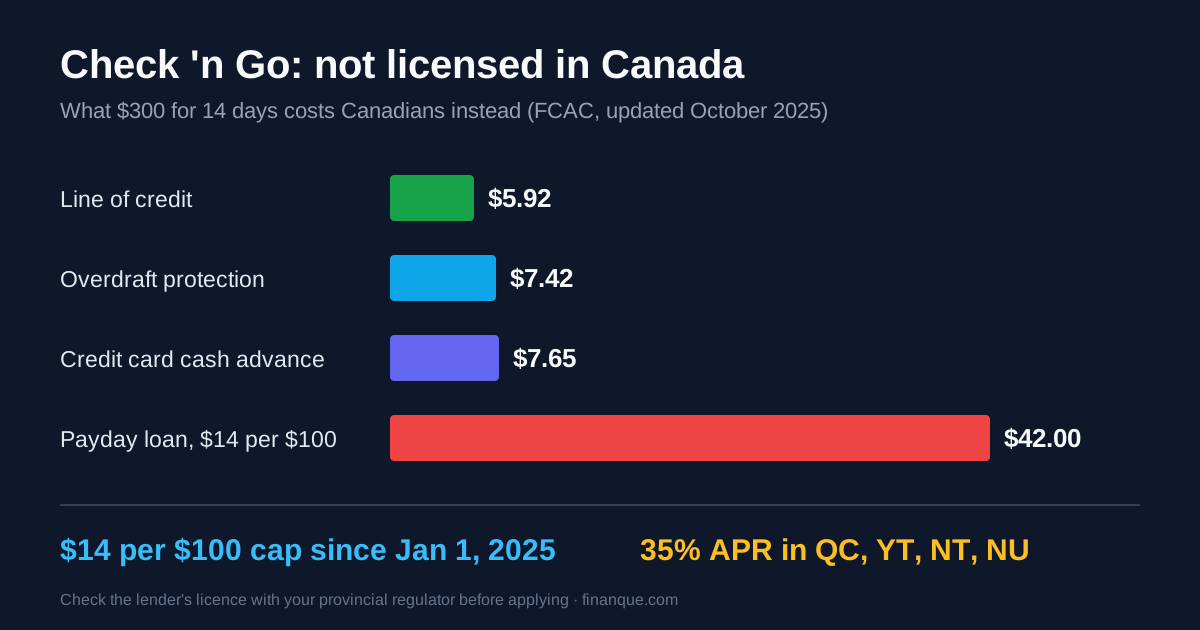
The term "Check and Go" often causes confusion in the Canadian banking landscape. It's important to clarify that "Check and Go" is not a specific financial product or service offered by major Canadian banks like TD Bank, RBC, BMO, Scotiabank, CIBC, or National Bank. Instead, it frequently refers to "Check 'n Go," a U.S.-based payday lender that does not operate in Canada.
In Canada, the closest equivalent concept for managing short-term cash flow, beyond your available balance, is overdraft protection. This is an optional add-on to your chequing account. It allows transactions to go through even if you don't have sufficient funds, up to a pre-approved limit. However, it's crucial to understand that overdraft protection is not a standalone "check and go" product; it's a feature tied to your primary chequing account.
All the major Canadian banks provide a range of everyday chequing accounts. These accounts are designed for essential banking activities such as deposits, bill payments, and daily transactions. They come in various tiers, from basic options to premium packages, each with different features, monthly fees, and potential fee waivers.
Overdraft protection, while widely available, requires separate approval. It's a regulated service, and banks conduct a credit check before granting access. This is a significant difference from the concept of a quick, unverified "check and go" service.
Understanding these distinctions is vital for Canadian consumers. This guide will delve into the specifics of chequing accounts and overdraft services offered by Canada's leading financial institutions, ensuring you have clear, accurate information.
Chequing Accounts Overview and Overdraft Protection
Canada's "Big Six" banks – TD Bank, RBC, BMO, Scotiabank, CIBC, and National Bank – all offer comprehensive chequing account services. These accounts are the cornerstone of personal finance, facilitating daily transactions for millions of Canadians. They are designed to be flexible, accommodating various financial needs and transaction volumes.
Each bank provides multiple tiers of chequing accounts. You can typically find basic accounts with limited transactions, unlimited transaction accounts, and premium accounts that offer enhanced benefits like higher transaction limits, free e-transfers, and even travel insurance. Monthly fees for these accounts often vary, but most banks offer ways to waive these fees, such as maintaining a minimum balance or setting up direct deposits.
Overdraft protection is a common add-on to these chequing accounts. It acts as a safety net, allowing your debit card purchases, pre-authorized payments, and cheque transactions to clear even if your account balance drops below zero. This prevents declined transactions and potential non-sufficient funds (NSF) fees, but it comes with its own costs, primarily in the form of interest charges.
It's important to reiterate that no Canadian bank uses the term "Check and Go" for these services. Overdraft services are carefully regulated and require consumers to meet specific eligibility criteria, including a credit check. They are not instant, unverified loans but rather pre-approved credit lines linked to your chequing account.
| Bank | Key Chequing Account | Monthly Fee | Overdraft Rate (Typical) | Other Fees |
|---|---|---|---|---|
| TD Bank | Unlimited Chequing | $16.95 (waivable) | Prime + 7.0% (~21.0% APR) | NSF $48 |
| RBC | No Limit Banking | $29.95 (waivable) | Prime + 7.0% | NSF $45 |
| BMO | Performance Chequing | $17.95 (waivable w/$4k balance) | Prime + 7.0% | CDIC Insured |
| Scotiabank | Preferred Package | $16.95 (waivable) | Prime + 7.0% | Nested in bundles |
| CIBC | Smart Account | $16.95–$29.95 (waivable) | Prime + 7.0% | $50 signup bonus promo |
| National Bank | Everyday Chequing | $0–$25+ (waivable) | Varies by province | Quebec-focused |
As of early May 2026, the typical overdraft rate has stabilized at Prime + 7.0%, resulting in an APR of approximately 21.0%. This rate remains a significant factor for anyone considering using their overdraft limit. It's a reminder that this financial tool is best reserved for urgent, short-term needs.
Chequing account monthly fees are generally consistent across the major banks. The most common monthly fee for unlimited transaction accounts sits around $16.95. Many banks offer promotions, such as CIBC's $50 signup bonus, to attract new customers, often tied to setting up direct deposits.
Eligibility for fee waivers often requires maintaining a minimum balance. For example, BMO's Performance Chequing account requires a $4,000 balance to waive its $17.95 monthly fee. Meeting these conditions can lead to substantial savings over the year.
Eligibility Criteria for Chequing Accounts and Overdrafts
Obtaining a chequing account in Canada is generally straightforward for residents. The basic requirements are consistent across all major banks, including TD Bank, RBC, BMO, Scotiabank, CIBC, and National Bank. These criteria ensure that individuals can access essential banking services with minimal hurdles.
To open a standard chequing account, individuals typically need to be at least 18 years of age. In some provinces, this age requirement may be 19. Applicants must provide valid identification, such as a driver's license, passport, or a Social Insurance Number (SIN). Proof of address, like a utility bill or bank statement, is also usually required to verify residency.
Eligibility for overdraft protection, however, is more stringent. Since overdraft is a form of credit, banks conduct a credit check. This requires applicants to have a reasonable credit score, typically around 600 or higher. Banks will also often ask for proof of income, such as recent pay stubs or bank statements, to assess an applicant's ability to repay any funds used in overdraft.
Each bank may have specific nuances regarding overdraft eligibility. For instance, BMO has been noted to require a higher minimum balance, sometimes $4,000 or more, for customers to waive fees on their premium chequing accounts, which can indirectly influence eligibility for associated credit products like overdraft. This ensures responsible lending practices.
Interest Rates and Fees: Understanding the Costs
Chequing accounts themselves typically earn minimal to no interest. Their primary function is transactional convenience, not wealth generation. However, overdraft protection is a credit facility, and as such, it accrues interest charges when utilized. These charges can be substantial, making overdraft an expensive short-term solution.
| Bank | Key Chequing Account | Monthly Fee | Overdraft Rate (Typical) | Other Fees |
|---|---|---|---|---|
| TD Bank | Unlimited Chequing | $16.95 (waivable) | Prime + 7% (~21% APR) | NSF $48 |
| RBC | No Limit Banking | $29.95 (waivable) | Prime + 7% | NSF $45 |
| BMO | Performance Chequing | $17.95 (waivable w/$4k balance) | Prime + 7% | CDIC Insured |
| Scotiabank | Preferred Package | $16.95 (waivable) | Prime + 7% | Nested in bundles |
| CIBC | Smart Account | $16.95–$29.95 (waivable) | Prime + 7% | $50 signup bonus promo |
| National Bank | Everyday Chequing | $0–$25+ (waivable) | Varies by province | Quebec-focused |
As of early 2026, with the prime rate hovering around 6%, the typical overdraft rate is Prime + 7%, resulting in an Annual Percentage Rate (APR) of approximately 13%. This is a significant cost, highlighting that overdraft should be used sparingly and for very short periods. These rates can fluctuate based on Bank of Canada decisions regarding the prime rate.
Beyond interest on overdrafts, other fees associated with chequing accounts are critical to note. Non-Sufficient Funds (NSF) fees are charged when a transaction attempts to process but your account lacks the necessary funds, and you don't have overdraft protection, or you exceed your overdraft limit. These fees typically range from $45 to $50 per instance, as seen with TD Bank's $48 NSF fee and RBC's $45 fee.
Monthly account maintenance fees are another common charge. While most banks offer ways to waive these fees—such as maintaining a minimum balance, setting up direct deposits, or holding other products with the bank—it's essential to understand the conditions. For example, BMO's Performance Chequing account fee of $17.95 is waivable with a minimum balance of $4,000.
Step-by-Step Application Process
Applying for a chequing account and potentially adding overdraft protection is a streamlined process across Canadian banks. Whether you choose to apply online or in-branch, the steps are generally designed for efficiency and convenience.
The first step is always to compare accounts. Utilize bank websites or financial comparison platforms like Ratehub.ca to evaluate the different chequing tiers and their associated features, fees, and fee-waiver conditions. This comparison helps you select the account that best fits your transactional needs and financial habits.
Once you've chosen an account, gather your required documents. This typically includes government-issued identification, your Social Insurance Number (SIN), and proof of address. If you're also applying for overdraft protection, you'll need additional documents like recent pay stubs or bank statements to demonstrate income and financial stability.
You can then apply online or visit a bank branch. Online applications are usually quick, often taking only 5-10 minutes to complete. If you're applying for overdraft, be prepared for a credit check as part of the application process. In-branch applications offer the benefit of direct assistance from a bank representative who can answer any questions.
After your application is approved, you'll deposit initial funds into your new account. Your debit card will be issued, and you can also order cheques if needed. Finally, activate your debit card and set up any direct deposits or pre-authorized payments. Setting up direct deposits is often key to qualifying for monthly fee waivers on many chequing accounts.
The ease of opening a chequing account is a key advantage for Canadian residents. With just two pieces of valid ID and proof of address, individuals can quickly set up their primary banking hub. The process is designed to be accessible while maintaining security standards.
Understanding the interplay between your chequing account, overdraft protection, and potential NSF fees is vital. Proactive management of your finances, including regular balance checks and budgeting, is the best defense against incurring avoidable charges. Overdraft should not be seen as an extension of your regular income.
OSFI's role in overseeing bank solvency ensures that Canadian financial institutions remain strong and reliable. This underlying stability contributes to the security of your deposits and the overall trustworthiness of the banking system. It’s a foundational element of consumer confidence.
Required Documents for Account Opening
Opening a chequing account and securing overdraft protection with a Canadian bank necessitates specific documentation. These requirements are in place to comply with regulatory standards and to protect both the bank and the customer.
For basic chequing account opening, you will need at least two pieces of valid government-issued identification. This typically includes a primary piece of photo ID such as a driver's license or passport. A secondary piece of ID could be a health card (though often not accepted for photo ID purposes in some provinces) or a SIN card. Your Social Insurance Number (SIN) or an Individual Tax Number (ITIN) for non-residents is also mandatory for tax reporting purposes.
Proof of address is another critical component. This can be a recent utility bill (hydro, gas, internet), a current lease agreement, or another bank statement from a different institution. The document must clearly display your name and current residential address.
When applying for overdraft protection, which is a credit product, additional documentation is required. You will generally need to provide proof of income. This might include recent pay stubs (typically two or three), an employment letter, or recent income tax assessments. This allows the bank to assess your repayment capacity and conduct a thorough credit check.
Having all these documents prepared in advance will significantly speed up the application process, whether you're applying online or in person. It ensures a smooth and efficient experience when establishing your banking relationship.
Advantages and Risks of Chequing Accounts and Overdrafts
Pros
- Convenience for daily transactions.
- CDIC protection for deposits up to $100k.
- Extensive ATM networks nationwide.
- Advanced mobile banking and online tools.
- Overdraft as a safety net for emergencies.
Cons
- High overdraft interest rates (21%+ APR).
- Significant NSF charges ($45–$50).
- Risk of debt trap if overdraft unmanaged.
- Monthly fees if waiver conditions not met.
- Minimal to no interest earned on balances.
Canadian chequing accounts offer numerous advantages, primarily convenience and security. They provide a central hub for managing your money, facilitating everything from direct deposits of your paycheque to automated bill payments. The widespread ATM networks of major banks, along with robust mobile banking applications, ensure easy access to your funds and account management anytime, anywhere. Furthermore, your deposits are protected by the Canada Deposit Insurance Corporation (CDIC) up to $100,000 per depositor per bank, offering peace of mind.
Overdraft protection, when used responsibly, serves as a valuable safety net. It can prevent crucial payments from bouncing and avoid costly NSF fees in unexpected short-term cash crunch situations. This can maintain your credit standing and avoid inconvenience.
However, there are significant risks associated with both chequing accounts and, particularly, overdraft services. The monthly fees for chequing accounts can accumulate if you don't meet the waiver conditions, eroding your funds. More critically, overdraft protection, while convenient, comes with very high interest rates. With typical APRs exceeding 21% (Prime + 7%), it can quickly become an expensive form of credit. If not repaid promptly, it can lead to a debt trap.
Non-Sufficient Funds (NSF) charges, ranging from $45 to $50, are another substantial risk. These fees are incurred if you attempt a transaction without sufficient funds and without overdraft protection, or if you exceed your overdraft limit. Managing your account balance carefully and using overdraft only in genuine emergencies are crucial to mitigate these risks.
Regulations Governing Canadian Banking Services
The Canadian banking sector, including chequing accounts and overdraft services, is robustly regulated to protect consumers and maintain financial stability. Several key governmental and quasi-governmental bodies oversee these operations.
The Office of the Superintendent of Financial Institutions (OSFI) is the primary prudential regulator. OSFI oversees all federally regulated financial institutions, including banks, ensuring they remain solvent and stable. This includes setting capital requirements and risk management guidelines, which indirectly impact how banks offer credit products like overdraft protection.
The Canada Deposit Insurance Corporation (CDIC) plays a crucial role in protecting depositors. CDIC insures eligible deposits made at member institutions, including all major Canadian banks, up to $100,000 per depositor per institution. This insurance covers most types of chequing accounts, providing a safety net for your funds.
The Bank of Canada is responsible for setting monetary policy, including the target for the overnight rate, which influences the prime rate. The prime rate, in turn, dictates the interest rates charged on variable credit products like overdraft protection. While the Bank of Canada doesn't directly regulate chequing account fees or overdraft rules, its monetary policy decisions significantly affect the cost of borrowing for consumers.
These regulatory bodies ensure a secure and transparent banking environment. Consumers should be aware of these protections and the policies that govern their financial interactions. Understanding the role of OSFI, CDIC, and the Bank of Canada helps in making informed decisions about where and how to manage your money.