

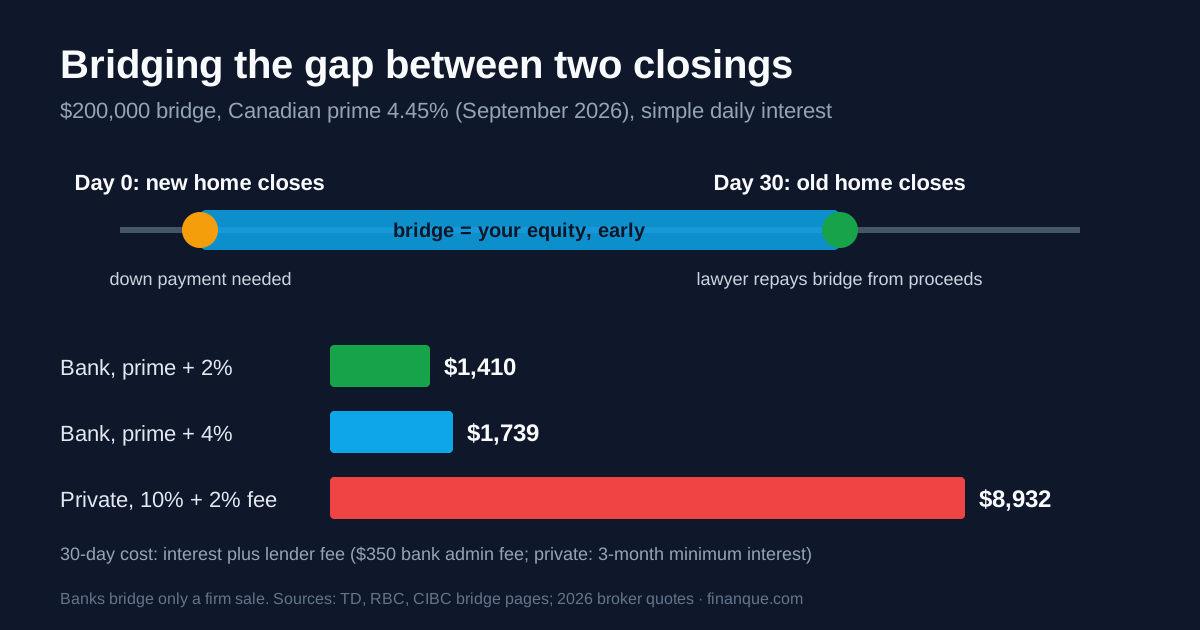
Buying a new home before selling your current one can present a timing challenge. This is where a bridge loan, also known as bridge financing, becomes an invaluable tool for Canadian homeowners. It provides essential short-term funding.
A bridge loan covers the gap between the purchase of a new property and the sale of your existing home. This avoids the stress of needing to sell your current residence under pressure or finding temporary accommodation.
Typically, these loans are designed for periods ranging from 30 days to six months. They are a practical solution for managing the logistics of moving homes. Understanding how they work, who offers them, and their associated costs is crucial for Canadian homeowners.
What is a Bridge Loan and How Does it Work in Canada?
A bridge loan is a short-term financial product. It helps homeowners acquire a new property before their existing one is sold. In Canada, this type of financing is specifically structured to bridge that temporal gap. It provides liquidity when you need to close on a new purchase but haven't yet received the proceeds from your sale.
The funds from a bridge loan essentially act as a temporary down payment or full purchase price for your new home. Once your current home sale closes, the proceeds are used to repay the bridge loan in full. This ensures a seamless transition between properties without financial strain.
Bridge loans are not long-term mortgage solutions. They are designed for specific, short durations. This makes them ideal for homeowners who have a firm sale agreement in place for their old home. They are also suitable for those who are confident it will close within a few weeks or months.
Interest rates on bridge loans are generally higher than traditional mortgage rates. This reflects their short-term nature and higher perceived risk. However, the convenience and flexibility they offer often outweigh the increased cost for many homeowners. They prevent the need for rushed sales or complex logistical planning.
Most major Canadian banks offer bridge financing. They integrate it into their mortgage product offerings. This means you can often arrange your bridge loan and new mortgage with the same institution. This streamlines the application process considerably.
Canadian Banks Offering Bridge Loans
Many homeowners wonder which financial institutions provide bridge loans. In Canada, all six major banks are key players in this market. These are TD Bank, RBC, BMO, Scotiabank, CIBC, and National Bank. They commonly offer bridge financing to eligible mortgage customers.
These "Big Six" banks provide bridge loans as a standard part of home purchase transitions. While they are the primary providers, some smaller lenders or credit unions may also offer similar products. However, most B-lenders typically do not engage in bridge financing due to its specific risk profile and short-term nature.
Each bank may have slightly varying terms and conditions. For example, RBC typically allows up to six months for a bridge loan. This term can be extendable if a firm sale agreement is in place for the old property. TD Bank often requires confirmed sale and new mortgage approval before granting a bridge loan. Scotiabank provides similar support under its standard lending conditions.
It is always advisable to discuss specific requirements with your preferred bank. This ensures you understand their particular criteria and offerings. This is crucial for securing the best terms for your individual situation.
| Bank | Max Term | Rate Structure | Key Fees | Notes |
|---|---|---|---|---|
| TD Bank | Varies | Prime +2.3% - 5.3% | $200-500 admin | Needs sale confirmation |
| RBC | 6 months | Prime +2.3% - 5.3% | $200-500 admin | Extendable w/ sale agreement |
| BMO | Varies | Prime +2.3% - 5.3% | $200-500 admin | Standard Big 6 terms |
| Scotiabank | Varies | Prime +2.3% - 5.3% | $200-500 admin | Less public details |
| CIBC | Varies | Prime +2.3% - 5.3% | $200-500 admin | Offered to mortgage clients |
| National Bank | Varies | Prime +2.3% - 5.3% | $200-500 admin | Big 6 participant |
The "Big Six" banks dominate the Canadian financial landscape. Their involvement ensures broad access to bridge loan products. This benefits homeowners across the country. They cater to a significant portion of the residential real estate market. This includes individuals looking to transition smoothly between properties.
When approaching these banks, it's essential to have a clear understanding of your financial situation. This includes your equity in the current home and your plans for the new property. This preparedness can significantly expedite the application process.
Ultimately, the best bank for your bridge loan will depend on your specific needs. It will also depend on your existing banking relationships and the terms they offer. Comparing offers across multiple institutions is always a smart strategy.
Canadian Banks Offering Bridge Loans
Many homeowners wonder which financial institutions provide bridge loans. In Canada, all six major banks are key players in this market. These are TD Bank, RBC, BMO, Scotiabank, CIBC, and National Bank. They commonly offer bridge financing to eligible mortgage customers.
These "Big Six" banks provide bridge loans as a standard part of home purchase transitions. While they are the primary providers, some smaller lenders or credit unions may also offer similar products. However, most B-lenders typically do not engage in bridge financing due to its specific risk profile and short-term nature.
Each bank may have slightly varying terms and conditions. For example, RBC typically allows up to six months for a bridge loan. This term can be extendable if a firm sale agreement is in place for the old property. TD Bank often requires confirmed sale and new mortgage approval before granting a bridge loan. Scotiabank provides similar support under its standard lending conditions.
It is always advisable to discuss specific requirements with your preferred bank. This ensures you understand their particular criteria and offerings. This is crucial for securing the best terms for your individual situation.
| Bank | Max Term | Rate Structure | Key Fees | Notes |
|---|---|---|---|---|
| TD Bank | Varies | Prime +2-5% | $200-500 admin | Needs sale confirmation |
| RBC | 6 months | Prime +2-5% | $200-500 admin | Extendable w/ sale agreement |
| BMO | Varies | Prime +2-5% | $200-500 admin | Standard Big 6 terms |
| Scotiabank | Varies | Prime +2-5% | $200-500 admin | Less public details |
| CIBC | Varies | Prime +2-5% | $200-500 admin | Offered to mortgage clients |
| National Bank | Varies | Prime +2-5% | $200-500 admin | Big 6 participant |
The "Big Six" banks dominate the Canadian financial landscape. Their involvement ensures broad access to bridge loan products. This benefits homeowners across the country. They cater to a significant portion of the residential real estate market. This includes individuals looking to transition smoothly between properties.
When approaching these banks, it's essential to have a clear understanding of your financial situation. This includes your equity in the current home and your plans for the new property. This preparedness can significantly expedite the application process.
Ultimately, the best bank for your bridge loan will depend on your specific needs. It will also depend on your existing banking relationships and the terms they offer. Comparing offers across multiple institutions is always a smart strategy.
The "Big Six" banks dominate the Canadian financial landscape. Their involvement ensures broad access to bridge loan products. This benefits homeowners across the country. They cater to a significant portion of the residential real estate market. This includes individuals looking to transition smoothly between properties.
When approaching these banks, it's essential to have a clear understanding of your financial situation. This includes your equity in the current home and your plans for the new property. This preparedness can significantly expedite the application process.
Ultimately, the best bank for your bridge loan will depend on your specific needs. It will also depend on your existing banking relationships and the terms they offer. Comparing offers across multiple institutions is always a smart strategy.
Eligibility Criteria for a Bridge Loan
Qualifying for a bridge loan involves meeting specific criteria set by lenders. These requirements ensure that the loan is extended to homeowners who can realistically manage and repay it. A primary qualification is having sufficient equity in your current home.
Lenders typically require at least 20% equity in the property you are selling. This equity acts as security for the bridge loan. It assures the lender that there are enough funds from the sale to cover the loan amount. Without adequate equity, securing a bridge loan can be challenging.
In addition to equity, lenders assess your overall financial health. This includes your credit profile, which should be strong. They also evaluate your income stability. This demonstrates your ability to make payments, even if temporary, and manage your financial obligations.
A firm purchase agreement for your new property is another critical requirement. This proves that you have a confirmed next step in your housing transition. Lenders also need to see that you have approval for a mortgage or home equity line of credit on the new home. This ensures your long-term financing is in place.
Bridge loans are intended for homeowners with strong financials. They are designed to bridge a legitimate sale gap. They are not aimed at speculative buyers or those with uncertain financial prospects. The goal is to facilitate a smooth, planned property transition.
Interest Rates and Fees Associated with Bridge Loans
Understanding the costs of a bridge loan is crucial. Interest rates for bridge loans are generally higher than standard mortgage rates. This is due to their short-term nature and the inherent risk. Lenders often quote these rates as prime plus a certain percentage.
Typically, you can expect rates to be in the range of prime +2% to 5%. For instance, if the Bank of Canada's prime rate is 6.5%, your bridge loan rate could range from 8.5% to 11.5%. Some fixed options may also be available, often around the 8% mark, depending on market conditions and the lender.
The interest calculation can add up quickly, even for short periods. For a $100,000 loan at a 10% annual interest rate over 30 days, the interest cost would be approximately $800. This highlights the importance of minimizing the loan term.
Beyond interest, there are several fees associated with bridge loans. Administrative or setup charges typically range from $200 to $500. These cover the paperwork and processing involved. You can also expect legal fees, usually between $200 and $300, for preparing and registering the necessary documents.
It's vital to calculate the total cost upfront. This includes both interest and fees. This comprehensive understanding prevents any surprises. It helps you make an informed decision about whether a bridge loan is the right financial tool for your situation.
The Bridge Loan Application Process
Applying for a bridge loan in Canada follows a structured process. The first step involves contacting a bank mortgage specialist or a mortgage broker. They can help you with pre-approval for your new mortgage and assess your bridge loan needs. This initial consultation is crucial for understanding your options.
Next, you will need to submit various documents. These include proof of income, details of your current mortgage, and listings for both your old and new properties. Property appraisals and signed purchase and sale agreements are also essential. These documents provide the lender with a complete financial picture.
The lender will then conduct a thorough review of your credit and income. They will verify your equity in the home being sold. Approval can often be granted within a few days if your equity is strong and all documentation is in order. This efficiency is key for time-sensitive property transactions.
Once approved, you will sign the necessary agreements. The funds are then disbursed. These funds are typically used to cover the down payment or the full purchase price of your new home. This ensures you can close on your new property as planned.
Repayment of the bridge loan is tied to the sale of your old home. You usually make interest-only payments during the bridge loan term. The principal amount is repaid in full from the proceeds of your old home's sale. This seamless repayment mechanism is a core feature of bridge financing.
Required Documents for a Bridge Loan Application
To streamline your bridge loan application, having all necessary documents prepared in advance is highly beneficial. Lenders require a comprehensive set of papers to assess your eligibility and financial standing. The list includes both personal identification and property-specific details.
Firstly, you will need government-issued identification. This could be a driver's license or passport. This verifies your identity. Proof of income is also essential, typically in the form of recent pay stubs or tax returns. Self-employed individuals may need to provide more extensive financial statements.
Your current mortgage statement is required. This confirms your existing loan details and outstanding balance. Proof of down payment funds for your new home is also necessary. This shows you have the capital for the next step. An MLS listing for both your old and new properties provides essential property information.
Crucially, you must provide property appraisals. These confirm the value of both homes. Signed purchase and sale agreements for both properties are also mandatory. These contracts solidify your housing transaction plans. Finally, a void cheque is often required for setting up payments, though interest-only payments are common during the term.
Gathering these documents beforehand can significantly speed up the application process. It demonstrates your readiness and commitment to the property transaction. A well-organized application makes a strong positive impression on lenders.
Advantages and Risks of Bridge Loans
Pros
- Quick access to funds for new home purchase.
- Seamless transition between properties.
- Avoids temporary housing and storage costs.
- Leverages existing home equity without a rushed sale.
- Reduces pressure to sell old home quickly.
Cons
- Higher interest rates compared to standard mortgages.
- Additional fees (admin, legal) increase overall cost.
- Potential for double mortgage payments if sale delays.
- Strict repayment terms tied to old home sale.
- Not suitable for weak equity or uncertain sales.
Bridge loans offer distinct advantages for homeowners navigating a property transition. They provide quick access to funds. This enables a seamless move into a new home without waiting for the sale of the old one. This can prevent the need for temporary housing and associated costs, like storage and multiple moves.
Leveraging your home equity is a key benefit. It allows you to use the value in your current property without being forced into a rushed or unfavourable sale. This flexibility reduces stress and allows for a more strategic sale process. You can wait for the right buyer and the right price for your old home.
However, bridge loans also come with significant risks. The most notable is the higher cost. Interest rates are elevated, and various fees add to the total expense. This can make them an expensive option if the term extends beyond initial expectations. It's crucial to factor these costs into your budget.
A major risk is the potential for double mortgage payments. If the sale of your old home is delayed, you could find yourself paying both your new mortgage and the bridge loan interest simultaneously. This can put a considerable strain on your finances. Bridge loans are also not ideal for those with weak equity or uncertain sale prospects. Repayment is strictly tied to the sale proceeds, and any issues there can cause serious problems.
Regulations Governing Bridge Loans in Canada
Bridge loans, as a form of lending, operate within Canada's robust financial regulatory framework. While they are short-term, they fall under the purview of standard mortgage rules. These rules are primarily overseen by the Office of the Superintendent of Financial Institutions (OSFI).
OSFI is responsible for regulating and supervising all federally regulated financial institutions, including the major banks. Their role ensures sound lending practices and adequate capital requirements for these banks. This oversight helps maintain the stability and integrity of the Canadian financial system. It ensures that banks extend credit responsibly.
It's important to note that the Canada Deposit Insurance Corporation (CDIC) insures eligible deposits up to $100,000 per depositor per bank. However, this insurance directly covers deposits, not loans. While bridge loans are offered by CDIC-insured institutions, the loan itself is not directly insured by CDIC.
The Bank of Canada plays an indirect but significant role. It influences lending rates across the country by setting the target for the overnight rate. This, in turn, affects the prime rate, which is the benchmark for many variable-rate loans, including bridge loans. While the Bank of Canada doesn't regulate specific products, its monetary policy impacts the cost of borrowing.
Furthermore, all bridge loans must comply with federal and provincial consumer protection laws. These laws safeguard borrowers against unfair practices. They ensure transparency in lending terms. This multi-layered regulatory environment provides a level of protection and stability for consumers engaging in bridge financing.
Expert Tips for Navigating Bridge Loans
To make the most of a bridge loan and minimize potential pitfalls, consider these expert tips. First, always shop around. Don't just go with your primary bank. A mortgage broker can be invaluable here, helping you compare rates and terms across various banks. Different institutions may offer slightly different conditions that could save you money.
It's often wise to list your old home first. Securing a firm sale agreement before applying for a bridge loan provides greater certainty. This can also help you demonstrate sufficient equity to lenders. This proactive approach strengthens your application and can lead to better terms.
Aim to minimize the bridge loan term. The shorter the duration, the less interest you will pay. Every extra week or month adds to the overall cost. Plan your closing dates carefully to align the sale of your old home with the purchase of your new one as closely as possible.
Calculate all total fees upfront. Use online calculators or consult with your lender to get a clear picture of the full cost, including interest, administrative fees, and legal charges. This transparency helps you budget effectively and avoids any surprises later on.
Confirm your old home sale is firm before finalizing your bridge loan application. Extensions on bridge loans are not guaranteed and can be costly if granted. A confirmed sale provides the necessary security for both you and the lender. Avoid a bridge loan if the housing market is softening. A prolonged sale could lead to significantly increased carrying costs, making the bridge loan financially burdensome. Prudent planning is key to a successful bridge loan experience.