


Dreaming of cruising Canada's stunning waters? A boat loan can turn that dream into a reality. These specialized secured loans are designed to finance recreational vessels, ranging from small motorboats to luxurious yachts. Major Canadian banks offer these products, often with competitive interest rates and flexible terms.
Guide: Send money abroad from Canada with transparent FX.
Understanding the nuances of marine financing is crucial. This guide will walk you through everything you need to know, from identifying top lenders to navigating the application process and understanding the associated costs and regulations. We’ll also look at the roles of key regulatory bodies like OSFI, CDIC, and the Bank of Canada.
Banks Offering Boat Loans in Canada
Several prominent Canadian financial institutions provide marine financing solutions. They cater to a wide range of borrowers, often working directly with dealers or accepting direct applications. Loan amounts can be substantial, sometimes exceeding $200,000, depending on the vessel and your financial profile.
| Bank | Typical Offerings |
|---|---|
| TD Bank | Offers competitive boat loans with flexible terms, often through dealer partnerships. Starting rates for strong credit profiles are around 6%. |
| RBC Royal Bank | Provides rates from 5.99%, terms up to 15 years, and attractive prepayment options without penalty. They also offer boat-secured loans for potentially better rates. |
| BMO | Known for tailored marine programs. Variable rates are influenced by factors such as credit score and the value of the boat. |
| Scotiabank | A top choice for dealer financing, offering up to $200,000. Rates can start from 5.79%, with up to 100% financing, fixed/variable options, and extended terms. |
| CIBC | Features competitive products for both new and used boats. They often work through marine specialists to provide tailored solutions. |
| National Bank | Included among the top lenders, offering flexible terms to suit various boat buyers' needs. |
Beyond the major banks, specialized lenders like Boat Loan Canada might also partner with these institutions, offering niche options or acting as brokers to connect you with suitable financing. It's always a good idea to explore all available avenues to find the best fit for your needs.
Eligibility Criteria for Boat Loans
Lenders assess several factors when considering a boat loan application. These criteria primarily focus on your financial stability and the details of the vessel you intend to purchase. Meeting these requirements increases your chances of approval and securing more favorable terms.
Key Eligibility Factors
- Stable income and a manageable debt-to-income ratio (typically under 40%).
- A strong credit score, ideally 700+ for the best rates, though 660+ may be acceptable.
- A down payment of 10-30% is usually required, reducing lender risk.
- The boat's age and type are assessed; newer vessels are generally preferred.
- The boat must be for personal and recreational use.
- Lenders will appraise the boat's book value to determine loan-to-value ratios.
Potential Hurdles
- A low credit score might lead to higher interest rates or require a larger down payment.
- A high debt-to-income ratio could hinder approval.
- Financing very old or unique vessels might be more challenging.
- Commercial use of the boat is typically not covered by recreational boat loans.
Marine survey and lien checklist - August 22, 2026
Used-boat financing usually requires a marine survey documenting hull condition, engine hours and fair market value. Lenders file a registry lien (PPSA/marine registry depending on province). Budget survey costs of roughly $400–$900 plus registration — they are not financed in every program.
| Document | Purpose | Timing |
|---|---|---|
| Marine survey | Collateral value | Before approval |
| Insurance binder | Loss payee clause | Before disbursement |
| Bill of sale | Ownership chain | Funding day |
| Registration | Lien perfection | Within lender window |
Private-sale boats without clear title history are often declined — use escrow or dealer purchase agreements when possible.
Even if your credit score is below the ideal threshold, some lenders may still consider your application. However, be prepared for potentially higher interest rates or a requirement for a larger down payment to mitigate the increased risk for the lender. Demonstrating a stable income and a history of responsible financial management can significantly bolster your application.
Interest Rates and Fees
Interest rates for boat loans in Canada generally range from 4% to 10%. This wide range is primarily influenced by your creditworthiness, the loan term, and whether you choose a fixed or variable interest rate. Fixed rates offer payment stability, while variable rates may fluctuate with market conditions, potentially saving you money if rates fall, but increasing costs if they rise.
| Bank / General | Starting Rate (Approx.) | Typical Terms | Key Fees/Notes |
|---|---|---|---|
| RBC | 5.99% | Up to 15 years | Prepayment privileges often included. |
| Scotiabank | 5.79% | Flexible, often extended | Up to 100% financing available in some cases. |
| TD Bank | ~6% | Varies by program | Often linked to dealer financing programs. |
| General Market | 4-10% | 5-20 years | Appraisal, administration fees possible. |
In addition to interest, be aware of other potential fees. Administration fees, which can range from $100 to $500, are common. For used boats, an appraisal fee might be necessary to assess the vessel's value. Some loans may also carry prepayment penalties, so always clarify this with your lender if you anticipate paying off your loan early.
The Bank of Canada's overnight rate significantly influences prime rates, which in turn affect variable interest rates for consumer loans. While the Bank of Canada doesn't directly regulate boat loan rates, its monetary policy decisions play a crucial role in the overall cost of borrowing. For example, if the overnight rate stands around 4.5-5% as a base, this directly impacts the prime rate from which variable boat loan rates are often derived.
Step-by-Step Application Process
Securing a boat loan involves a structured process, ensuring both you and the lender are comfortable with the terms. Following these steps can streamline your application and lead to a quicker approval.
- Research Boats & Get Quotes: Start by researching the type of boat you want and obtain quotes from dealers. Use online loan calculators to estimate potential monthly payments.
- Compare Lenders: Utilize online tools to compare offerings from various banks like RBC, Scotiabank, TD, BMO, CIBC, and National Bank. Consider getting pre-approvals to understand what you qualify for.
- Submit Application: Complete the loan application, either online or in-branch. Ensure all required documentation is attached.
- Review & Appraisal: The lender will review your credit history, income, and if applicable, arrange for an appraisal of the boat. This stage typically takes 1-7 business days.
- Approval & Funding: Upon approval, you will sign the necessary documents, and the funds will be disbursed to complete your boat purchase.
For convenience, many boat dealerships partner directly with banks like Scotiabank and RBC to offer on-site financing. This can significantly speed up the application process, allowing for point-of-sale approval and funding.
Required Documents for Boat Loans
To process your boat loan application efficiently, lenders will require a comprehensive set of documents. Having these prepared in advance can prevent delays.
- Personal Identification: Government-issued photo ID (e.g., driver's license, passport).
- Proof of Income: Recent pay stubs, T4s, or tax assessments to verify stable income.
- Credit History Authorization: Permission for the lender to access your credit report.
- Boat Details: Purchase agreement, bill of sale, photos of the vessel, and proof of ownership (if applicable, for used boats).
- Financial Statement: A summary of your assets and liabilities.
- For Used Boats: An appraisal report and any relevant Transport Canada documentation (e.g., proof of previous registration or licensing).
Ensuring all documents are accurate and up-to-date will help facilitate a smooth and timely approval process. Always double-check with your chosen lender for any specific additional requirements they may have.
Comparison Table: Major Banks
Here’s a quick overview of how some of the major Canadian banks compare when it comes to boat loans:
| Feature | RBC Royal Bank | Scotiabank | TD / CIBC / BMO / National Bank |
|---|---|---|---|
| Minimum Starting Rate (Approx.) | 5.99% | 5.79% | ~6% |
| Maximum Loan Amount | High (customized) | $200,000+ | Varies significantly by credit/boat |
| Maximum Terms Available | 15 years+ | Extended terms | Flexible, often up to 15-20 years |
| Key Strengths | Prepayment flexibility, competitive rates, boat-secured options. | Strong dealer financing network, potential for 100% financing, competitive rates. | Broad access, tailored programs, competitive products for new/used. |
While these figures provide a general idea, your specific rates and terms will depend on your individual financial profile, the boat's value, and prevailing market conditions. It's always recommended to get personalized quotes from multiple lenders.
Advantages and Risks of Boat Loans
Before committing to a boat loan, it's wise to weigh the potential benefits against the inherent risks. This balanced perspective will help you make an informed decision.
Advantages
- Lower interest rates compared to unsecured personal loans, as the boat acts as collateral.
- Longer repayment terms (up to 15-20 years) result in more manageable monthly payments.
- Interest can be tax-deductible if the boat qualifies as a secondary residence or for certain business uses.
- Helps build equity in an asset, even if it depreciates over time.
- Allows you to enjoy your vessel without a large upfront cash outlay.
Risks
- Boats generally depreciate in value, potentially outpacing your loan payoff schedule.
- Variable interest rates can increase your monthly payments if the Bank of Canada raises its prime rate.
- Defaulting on the loan can lead to repossession of your boat, impacting your credit score.
- Boats incur ongoing costs (maintenance, insurance, storage) which add to the overall financial burden.
- Seasonal usage in Canada means your asset might sit idle for months, yet payments continue.
Careful consideration of these points is essential. Ensure your budget can comfortably accommodate not just the loan payments but also all the ancillary costs associated with boat ownership. The Canadian Deposit Insurance Corporation (CDIC) does not insure boat loans, as they are secured credit products; the principal is protected by the collateral (the boat) itself rather than deposit insurance.
Regulations Governing Boat Loans in Canada
Several regulatory bodies and acts influence the boat loan landscape in Canada, ensuring consumer protection and financial stability.
- OSFI (Office of the Superintendent of Financial Institutions): This independent agency oversees federally regulated financial institutions, including major banks like RBC, TD, and Scotiabank. OSFI sets prudential rules regarding capital requirements, risk management, and lending practices for secured loans, indirectly impacting how banks offer boat loans.
- CDIC (Canada Deposit Insurance Corporation): While CDIC insures eligible deposits up to $100,000 per depositor per bank, it does not directly insure boat loans. Boat loans are secured by the vessel itself, meaning the collateral provides the security for the lender and borrower, not deposit insurance.
- Bank of Canada: The central bank of Canada sets the overnight interest rate, which influences the prime rate offered by commercial banks. This in turn affects variable interest rates for boat loans. While it doesn't have specific regulations for boat loans, its monetary policy has a significant impact on borrowing costs.
- Transport Canada: Beyond financing, Transport Canada requires pleasure craft licensing for most recreational boats. This involves documentation like proof of ownership (bill of sale) and identification, which is important for both buying and selling a boat and can be a requirement for loan finalization.
Additionally, provincial consumer protection laws and federal acts like the Cost of Borrowing (Banks) Regulations ensure transparency regarding annual percentage rates (APR) and fees associated with loans. These regulations aim to protect consumers from misleading information and unfair lending practices.
Expert Tips for Securing Your Boat Loan
Armed with knowledge, you can approach the boat loan process strategically. These expert tips can help you secure the best possible terms and avoid common pitfalls.
- Shop Around Extensively: Don't settle for the first offer. Obtain quotes from multiple lenders, including RBC, Scotiabank, TD, BMO, CIBC, and National Bank, to compare rates and terms.
- Aim for a Larger Down Payment: Putting down 20% or more can significantly reduce your interest rate, lower your monthly payments, and decrease your loan-to-value ratio, making you a more attractive borrower.
- Consider a Fixed Rate: If you anticipate interest rates might rise in the future, a fixed-rate loan provides payment stability and peace of mind.
- Newer Boats for Easier Approval: Lenders generally prefer financing newer vessels due to lower depreciation and maintenance risks.
- Maintain Good Credit & The Boat: A strong credit score is paramount. Additionally, maintaining your boat well can aid in potential refinancing or resale value.
- Leverage Dealer Promotions: Dealers often have special financing rates through partnerships with banks. Always inquire about these offers.
- Pre-qualify: Many lenders offer pre-qualification that doesn't impact your credit score. This gives you an idea of what you can afford before you commit to a specific boat.
By following these guidelines, you can navigate the boat loan landscape in Canada with confidence, securing the best possible financing for your aquatic adventures.
Prime-rate sensitivity - August 22, 2026
Variable marine lines reprice when prime moves — with BoC at {BOC_RATE}, stress-test +1% on your payment. Fixed-rate boat loans trade a higher starting rate for payment certainty over 7–10 years.
Ask whether prepayment penalties apply if you sell the boat mid-term.
Canadian Marine Financing Landscape — July 2026
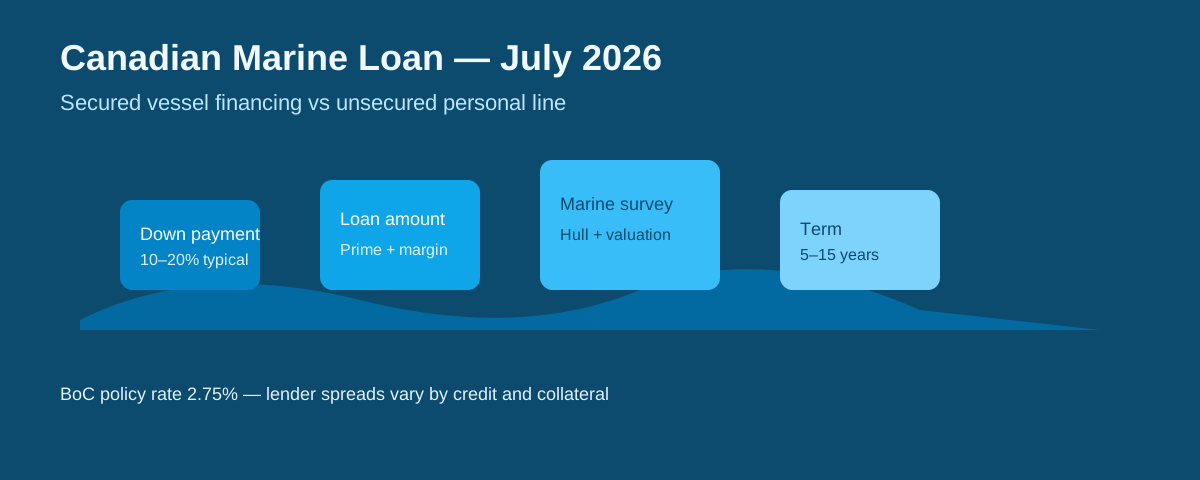
Boat loans in Canada are typically secured term loans or secured lines of credit against the vessel. With the Bank of Canada policy rate at 2.75% in July 2026, marine financing quotes usually start near prime plus a risk margin — exact spreads depend on credit score, boat age and whether the lender places a marine registry lien.
Major banks (RBC, TD, Scotiabank, BMO, CIBC) and specialty marine lenders evaluate down payments of roughly 10–20%, a marine survey on used boats, and insurance naming the lender as loss payee. Terms often run 5–15 years for powerboats and sailboats within insurer age limits.
| Factor | Typical range | Lender focus |
|---|---|---|
| Down payment | 10% – 20% | Lower LTV reduces rate |
| Boat age | ≤15–20 years | Older hulls → shorter amortization |
| Rate structure | Fixed or variable | Variable tracks prime (2.75% anchor) |
| Fees | Registration, survey | Marine registry lien filing |
| Insurance | Comprehensive marine | Required before funding |
Compare total cost of borrowing (APR) across bank marine desks and credit unions — a lower monthly payment with a longer term can cost more interest even when policy rates are stable at 2.75%.
*************************** 2. row *************************** content:L'acquisition d'un bateau représente un rêve pour de nombreux Canadiens, synonyme de liberté et d'aventures sur les vastes étendues d'eau du pays. Que vous envisagiez un voilier élégant, un bateau à moteur rapide ou un ponton familial, le financement est souvent une étape cruciale. Les prêts bateau au Canada sont des solutions de financement conçues spécifiquement pour cet investissement.
Ces prêts sont offerts par les principales institutions financières du pays, offrant aux emprunteurs la possibilité de réaliser leur projet nautique. Similaires aux prêts automobiles, ils utilisent le bateau comme garantie, ce qui permet souvent d'obtenir des taux plus avantageux et des conditions de remboursement flexibles. Ce guide complet vous éclairera sur les mécanismes des prêts bateau au Canada, les banques participantes, les critères d'éligibilité, et bien plus encore.
Le marché canadien des prêts bateau est dynamique, avec une variété d'options disponibles pour répondre à divers besoins et profils d'emprunteurs. Il est essentiel de bien comprendre les offres pour prendre une décision éclairée. Nous aborderons les aspects clés pour vous aider à naviguer à travers les différentes propositions et choisir le financement le plus adapté à votre situation.
Les Banques Canadiennes et les Prêts Bateau
Les grandes banques canadiennes jouent un rôle prépondérant dans l'octroi de prêts bateau. Elles comprennent l'attrait de la navigation et ont développé des produits financiers spécifiques pour cette catégorie de biens. Il est rassurant de savoir que des institutions établies sont prêtes à accompagner les acheteurs dans leur démarche.
Parmi les acteurs majeurs, on retrouve la TD Bank, RBC, BMO, Scotiabank, CIBC et la Banque Nationale. Chacune de ces banques propose des programmes de financement avec leurs propres spécificités, en termes de taux, de durées de prêt et de conditions d'admissibilité. Il est donc crucial d'examiner attentivement chaque offre pour trouver celle qui correspond le mieux à vos attentes.
La TD Bank, par exemple, est réputée pour financer divers types de bateaux via sa division TD Auto Finance. Elle propose des termes de remboursement pouvant aller jusqu'à 240 mois, soit 20 ans, avec des taux fixes compétitifs. Cette flexibilité sur la durée peut considérablement réduire les mensualités, rendant l'achat d'un bateau plus accessible.
RBC, BMO, Scotiabank et la Banque Nationale offrent également des programmes de financement adaptés, souvent en partenariat avec des concessionnaires de bateaux. Ces partenariats facilitent le processus pour l'acheteur, qui peut obtenir un financement directement au point de vente. Desjardins, une institution financière québécoise de premier plan, est aussi une option très populaire et courante pour les prêts bateau, notamment au Québec.
Marine survey and lien checklist - August 22, 2026
Used-boat financing usually requires a marine survey documenting hull condition, engine hours and fair market value. Lenders file a registry lien (PPSA/marine registry depending on province). Budget survey costs of roughly $400–$900 plus registration — they are not financed in every program.
| Document | Purpose | Timing |
|---|---|---|
| Marine survey | Collateral value | Before approval |
| Insurance binder | Loss payee clause | Before disbursement |
| Bill of sale | Ownership chain | Funding day |
| Registration | Lien perfection | Within lender window |
Private-sale boats without clear title history are often declined — use escrow or dealer purchase agreements when possible.
Critères d'Admissibilité aux Prêts Bateau
Pour obtenir un prêt bateau au Canada, les prêteurs évaluent plusieurs facteurs afin de déterminer votre capacité de remboursement et votre fiabilité en tant qu'emprunteur. Ces critères sont similaires à ceux appliqués pour d'autres types de prêts importants, comme les prêts automobiles ou hypothécaires.
Un revenu stable est un critère fondamental. Les banques veulent s'assurer que vous avez les moyens de couvrir les paiements mensuels du prêt, en plus de vos autres dépenses et obligations financières. Elles demanderont généralement des preuves de revenu, telles que des talons de paie récents, des avis de cotisation ou des déclarations de revenus.
Un bon score de crédit est également essentiel. Votre historique de crédit est une indication de votre comportement financier passé et de votre capacité à gérer vos dettes de manière responsable. Un score de crédit élevé vous ouvrira les portes à de meilleurs taux d'intérêt et à des conditions de prêt plus favorables. Les prêteurs examineront votre rapport de crédit pour identifier toute irrégularité ou retard de paiement.
De plus, un ratio d'endettement raisonnable est pris en compte. Ce ratio compare le montant de vos dettes mensuelles à votre revenu brut mensuel. Un ratio trop élevé peut indiquer que vous êtes déjà trop endetté, ce qui pourrait rendre l'ajout d'un nouveau prêt risqué pour le prêteur. Les banques chercheent un équilibre pour s'assurer que vous ne soyez pas surchargé financièrement.
Un acompte est souvent exigé pour un prêt bateau. Le montant de l'acompte varie généralement entre 10 % et 30 % du prix d'achat du bateau. Verser un acompte plus élevé peut réduire le montant total du prêt, et par conséquent, les intérêts payés sur la durée du prêt. Cela peut aussi améliorer vos chances d'obtenir un prêt et un taux plus bas, car cela démontre un engagement financier de votre part.
Pour les bateaux usagés, les prêteurs imposent généralement des conditions supplémentaires. Le bateau doit souvent être récent, avec un âge maximal généralement fixé à moins de 10 ans. Il doit également être conforme aux normes de sécurité fédérales et provinciales. Une inspection peut être requise pour s'assurer de l'état du bateau et de sa navigabilité, protégeant ainsi l'investissement de l'emprunteur et du prêteur.
Taux d'Intérêt et Frais Associés
Les taux d'intérêt et les frais sont des composantes cruciales du coût total d'un prêt bateau. Ils peuvent varier considérablement en fonction de votre profil de crédit, du type de bateau, et du prêteur choisi. Il est donc primordial de comprendre ces éléments pour planifier votre budget et éviter les surprises.
Les taux d'intérêt pour un prêt bateau au Canada commencent généralement à un niveau compétitif pour les emprunteurs ayant un excellent crédit. Par exemple, des taux d'environ 9,9% peuvent être offerts dans ce scénario idéal. Cependant, pour un crédit moyen, les taux peuvent grimper à 11,9% à 16,9%. Si votre dossier de crédit est moins favorable, ou si vous avez un mauvais crédit, attendez-vous à des taux d'intérêt de 19,9% ou plus. Certains prêteurs privés peuvent même offrir des taux allant jusqu'à 29,9%, ce qui souligne l'importance de magasiner et de comparer.
Les banques offrent généralement le choix entre des taux fixes et des taux variables. Un taux fixe reste le même pendant toute la durée du prêt, offrant une prévisibilité des paiements mensuels. Un taux variable, en revanche, peut fluctuer avec les taux du marché, ce qui peut entraîner des paiements mensuels plus bas ou plus élevés. Votre choix dépendra de votre tolérance au risque et de vos prévisions économiques.
En plus des intérêts, d'autres frais peuvent s'appliquer. Les frais les plus courants sont les pénalités de remboursement anticipé. Si vous décidez de rembourser votre prêt plus tôt que prévu, la banque peut vous facturer des frais pour compenser la perte d'intérêts. Il est essentiel de vérifier si ces pénalités sont incluses dans le contrat de prêt et de comprendre leur fonctionnement. D'autres frais peuvent inclure des frais d'administration ou des frais de dossier, bien que ceux-ci soient moins fréquents avec les grandes banques.
Pour mieux comprendre et comparer les différentes offres, l'utilisation de calculateurs en ligne est fortement recommandée. Ces outils vous permettent d'estimer les paiements mensuels et le coût total du prêt en fonction des taux d'intérêt, de la durée du prêt et du montant emprunté. Ils peuvent vous aider à visualiser l'impact des différents scénarios et à choisir l'option la plus économique.
Comparaison des Options de Prêts Bateau
Le marché canadien des prêts bateau est assez diversifié, avec plusieurs banques offrant des produits compétitifs. Une comparaison directe des options disponibles est essentielle pour choisir le prêt qui correspond le mieux à vos besoins et à votre situation financière. Voici un aperçu des offres des principales banques :
| Banque | Taux de départ (approx.) | Terme max. | Acompte typique | Notes |
|---|---|---|---|---|
| TD Bank | Compétitifs fixes | 240 mois | 10-20% | Via TD Auto Finance, large gamme de bateaux |
| RBC | À partir de 9,9% | 20 ans | 10-20% | Bon service client, options flexibles |
| BMO | Variables | 10-20 ans | 10-30% | Programmes marins spécialisés, bonnes options usagés |
| Scotiabank | Compétitifs | Flexible | 10-20% | Options pour bateaux usagés, personnalisables |
| CIBC | Prime + marge | Court | Variable | Basé sur le taux préférentiel, dépend du profil |
| Banque Nationale | Compétitifs | 20 ans | 10-20% | Accent sur le Québec, offre des conditions solides |
Ces informations sont des approximations et les taux peuvent varier en fonction de votre situation personnelle et des conditions du marché. Il est toujours recommandé de contacter directement chaque institution pour obtenir une soumission personnalisée.
La TD Bank se distingue par ses termes longs pouvant atteindre 240 mois, ce qui peut rendre les paiements mensuels très abordables. RBC et la Banque Nationale offrent également des termes allant jusqu'à 20 ans, ce qui est très avantageux pour répartir le coût du bateau sur une longue période. BMO et Scotiabank ont des programmes flexibles, y compris des options pour les bateaux usagés, qui peuvent être très utiles pour ceux qui cherchent à acheter un bateau d'occasion.
La CIBC, quant à elle, propose souvent des prêts basés sur le taux préférentiel plus une marge. Cela signifie que le taux d'intérêt peut être variable et dépendre de l'évolution du taux directeur de la Banque du Canada. Ce type de prêt peut être intéressant si vous anticipez une baisse des taux, mais il comporte un risque de hausse si les taux augmentent.
Le Processus de Demande de Prêt Bateau
Le processus de demande de prêt bateau est relativement standardisé chez la plupart des institutions financières. Suivre les étapes correctement vous aidera à obtenir un financement rapidement et efficacement. Une bonne préparation est la clé du succès pour toute demande de prêt.
La première étape consiste à évaluer votre budget. Avant même de commencer à chercher un bateau, vous devez savoir combien vous pouvez vous permettre d'emprunter et de rembourser chaque mois. Tenez compte non seulement du coût du prêt, mais aussi des frais d'assurance, d'entretien, de carburant et d'amarrage. Une fois que vous avez une idée claire de votre budget, vous pouvez obtenir une préapprobation de prêt. La préapprobation vous donne une estimation du montant que vous pouvez emprunter et vous permet de magasiner votre bateau avec plus de confiance, sachant que le financement est potentiellement assuré.
Ensuite, il est temps de rechercher les prêteurs et les concessionnaires partenaires. De nombreuses banques collaborent avec des concessionnaires de bateaux, ce qui simplifie souvent le processus. Le concessionnaire peut vous aider à remplir les formulaires de demande et à soumettre votre dossier à plusieurs prêteurs. Cela peut vous faire gagner du temps et vous offrir un plus large éventail d'options de financement. N'hésitez pas à comparer les offres des banques et des concessionnaires pour trouver les meilleures conditions.
Une fois que vous avez choisi un prêteur et un bateau, vous devrez fournir les documents requis et signer l'entente de prêt. Le processus est souvent simplifié grâce aux réseaux de concessionnaires des banques, qui agissent comme intermédiaires pour faciliter la transaction. Ils vous guideront à travers la paperasse et s'assureront que tous les documents nécessaires sont en ordre. Une fois le contrat signé, les fonds sont déboursés et vous pouvez prendre possession de votre bateau.
Documents Requis pour un Prêt Bateau
Pour compléter une demande de prêt bateau, vous devrez fournir un ensemble de documents qui prouvent votre identité, votre situation financière et les détails du bateau que vous souhaitez acquérir. Avoir ces documents prêts à l'avance peut accélérer considérablement le processus d'approbation.
Les preuves de revenu sont parmi les documents les plus importants. Cela inclut généralement les avis de cotisation des deux dernières années, qui sont des relevés fiscaux émis par l'Agence du revenu du Canada (ARC). Les talons de paie récents, généralement les trois ou quatre derniers, sont également requis pour confirmer votre revenu actuel. Si vous êtes travailleur autonome, vous devrez fournir des états financiers d'entreprise ou des déclarations de revenus détaillées.
Votre historique de crédit et un rapport de crédit détaillé sont également essentiels. Les prêteurs utiliseront ces informations pour évaluer votre solvabilité et votre capacité à gérer vos dettes. Vous pouvez obtenir une copie gratuite de votre rapport de crédit auprès des principales agences d'évaluation du crédit au Canada, telles qu'Equifax et TransUnion. Il est judicieux de vérifier votre rapport de crédit avant de faire une demande de prêt pour corriger toute erreur potentielle.
Enfin, vous devrez fournir des détails complets sur le bateau que vous souhaitez financer. Cela inclut la facture d'achat ou le contrat de vente, qui indique le prix du bateau. Pour les bateaux usagés, une évaluation peut être nécessaire pour déterminer sa juste valeur marchande. De plus, il faudra prouver que le bateau est conforme aux normes de sécurité fédérales et provinciales. Cela peut implure un certificat d'inspection ou d'autres documents pertinents. Ces informations permettent au prêteur de s'assurer de la valeur de la garantie et de la légalité de la transaction.
Avantages et Risques des Prêts Bateau
Comme tout produit financier, les prêts bateau comportent des avantages et des risques qu'il est important de comprendre avant de s'engager. Une évaluation équilibrée des deux côtés vous aidera à prendre une décision éclairée et à gérer vos attentes.
Avantages
- Taux fixes stables, offrant une prévisibilité des paiements.
- Termes longs réduisant les paiements mensuels, rendant l'achat plus accessible.
- Accès à des bateaux haut de gamme qui seraient autrement inabordables.
- Le bateau devient une garantie, ce qui peut entraîner des taux d'intérêt plus bas que les prêts personnels non garantis.
- Possibilité de financer les taxes et l'assurance avec le prêt principal.
Risques
- Le bateau comme garantie : risque de saisie en cas de défaut de paiement.
- Taux d'intérêt plus élevés pour les emprunteurs ayant un mauvais crédit.
- Dépréciation rapide du bien, le bateau perd de la valeur avec le temps.
- Coût total du prêt plus élevé à cause des intérêts accumulés sur une longue durée.
- Frais supplémentaires (assurance, entretien, amarrage) qui peuvent peser sur le budget.
Parmi les avantages, les taux fixes stables sont un atout majeur. Ils vous permettent de connaître précisément le montant de vos paiements mensuels pendant toute la durée du prêt, facilitant ainsi la planification budgétaire. Les termes longs, parfois jusqu'à 20 ans, réduisent significativement les mensualités, rendant l'achat de bateaux plus coûteux plus accessible. Cela ouvre la porte à des bateaux haut de gamme qui pourraient être hors de portée avec un financement à court terme.
Cependant, il existe des risques non négligeables. Le principal est que le bateau lui-même sert de garantie. En cas de défaut de paiement, le prêteur a le droit de saisir le bateau pour récupérer les fonds dus. C'est une conséquence sérieuse à considérer. De plus, si vous avez un mauvais crédit, les taux d'intérêt peuvent être considérablement plus élevés, augmentant le coût total du prêt de manière significative. Un autre facteur important est la dépréciation rapide des bateaux. Contrairement à l'immobilier, un bateau perd généralement de la valeur avec le temps, ce qui signifie que vous pourriez devoir plus que la valeur marchande du bateau à un certain moment du prêt, surtout au début.
Réglementation et Protection des Consommateurs (OSFI/SADC)
Au Canada, le secteur financier est rigoureusement réglementé pour assurer la stabilité et protéger les consommateurs. Lorsque vous contractez un prêt bateau auprès d'une grande banque, vous bénéficiez de cette structure de surveillance. Deux organismes clés sont l'OSFI (Bureau du surintendant des institutions financières) et la SADC (Société d'assurance-dépôts du Canada).
L'OSFI est l'organisme de réglementation des institutions financières fédérales. Il supervise les banques et autres prêteurs pour s'assurer qu'ils respectent des normes strictes en matière de gestion des risques et de solidité financière. Son rôle est de maintenir la stabilité du système financier canadien. L'OSFI s'assure que les prêteurs évaluent adéquatement les risques associés aux prêts qu'ils accordent, y compris les prêts bateau, et qu'ils disposent de réserves suffisantes pour faire face à d'éventuels défauts de paiement. Cela signifie que les banques que nous avons mentionnées (TD, RBC, BMO, Scotiabank, CIBC, Banque Nationale) sont toutes soumises à la surveillance de l'OSFI, offrant un niveau de confiance et de sécurité.
La SADC, quant à elle, protège les dépôts des Canadiens en cas de faillite d'une institution financière membre. Elle assure les dépôts jusqu'à concurrence de 100 000 $ par institution, par catégorie de dépôt. Il est important de noter que la protection de la SADC s'applique aux dépôts, et non aux prêts. Autrement dit, si vous avez un prêt auprès d'une institution membre et que celle-ci fait faillite, votre obligation de rembourser le prêt subsiste. Cependant, le fait qu'une institution soit membre de la SADC est un indicateur de sa légitimité et de sa conformité aux normes réglementaires, ce qui peut vous donner une tranquillité d'esprit concernant la stabilité de votre prêteur.
Il est toujours judicieux de vérifier la conformité des prêteurs, surtout si vous envisagez des options au-delà des grandes banques traditionnelles. Assurez-vous que l'institution est dûment enregistrée et réglementée. Cette diligence raisonnable est essentielle pour vous protéger contre d'éventuels prêteurs non scrupuleux. La Banque du Canada, bien qu'elle n'intervienne pas directement dans la réglementation des prêts individuels, joue un rôle crucial dans la fixation des taux d'intérêt directeurs, qui influencent les taux offerts par les banques commerciales pour les prêts bateau et autres produits financiers. Ses décisions en matière de politique monétaire peuvent donc avoir un impact indirect sur le coût de votre financement.
Conseils Pratiques pour un Prêt Bateau Réussi
Obtenir le meilleur prêt bateau possible nécessite une approche stratégique et une bonne préparation. Voici quelques conseils pratiques pour vous aider à naviguer le processus de financement et à sécuriser une offre avantageuse.
Tout d'abord, ne vous limitez pas à une seule institution. Il est impératif de comparer les taux d'intérêt et les conditions offertes par plusieurs banques et, si vous le souhaitez, par des prêteurs privés. Les différences de taux peuvent sembler minimes au premier abord, mais sur la durée d'un prêt de plusieurs années, elles peuvent représenter des milliers de dollars d'économies. Demandez des soumissions détaillées à la TD Bank, RBC, BMO, Scotiabank, CIBC et la Banque Nationale, puis comparez-les côte à côte.
Ensuite, envisagez de verser un acompte élevé. Un acompte substantiel réduit le montant total que vous devez emprunter, ce qui diminue les intérêts que vous paierez sur la durée du prêt. Cela peut également vous permettre d'obtenir un taux d'intérêt plus bas, car cela réduit le risque pour le prêteur. Si vous avez les moyens, un acompte de 20% ou plus est souvent idéal pour bénéficier de meilleures conditions.
Concernant le type de taux, préférez les taux fixes en période d'incertitude économique. Un taux fixe vous protège contre les hausses potentielles des taux d'intérêt, assurant que vos paiements mensuels restent constants et prévisibles. Si les taux d'intérêt sont bas et que l'économie est stable, un taux variable pourrait être intéressant, mais il comporte un risque de fluctuation. La Banque du Canada influence directement ces taux via sa politique monétaire, donc surveillez les annonces pour prendre une décision éclairée.
Enfin, avant de vous engager, consultez un conseiller financier. Un professionnel peut vous aider à évaluer votre capacité de remboursement en tenant compte de l'ensemble de votre situation financière. Il pourra vous donner des conseils personnalisés, vous aider à comprendre les petits caractères des contrats et s'assurer que le prêt bateau s'intègre harmonieusement dans votre budget global. Un conseiller peut également vous informer sur les implications fiscales et les meilleures stratégies pour gérer votre dette. Une planification financière solide est la clé pour profiter de votre bateau sans stress.
Panorama du financement nautique au Canada — juillet 2026
Les prêts bateau au Canada sont en général des crédits garantis sur l'embarcation. En juillet 2026, le taux directeur de la Banque du Canada est à 2.75% — les offres des banques (RBC, TD, Scotiabank, BMO, CIBC) s'expriment souvent en taux préférentiel + marge selon le profil de crédit et l'âge du navire.
Comptez un acompte de 10 à 20 %, une inspection marine pour l'occasion et une assurance désignant le créancier. Les amortissements courent fréquemment sur 5 à 15 ans pour les bateaux admissibles.
| Élément | Fourchette habituelle | Point de vigilance |
|---|---|---|
| Acompte | 10 % – 20 % | LTV plus bas = meilleure marge |
| Âge du bateau | ≤15–20 ans | Amortissement raccourci si vieux |
| Taux | Fixe ou variable | Variable suit le préférentiel |
| Assurance | Tous risques nautique | Obligatoire avant déboursement |
Comparez le coût total du crédit (TAEG) entre banque, caisse et financement concessionnaire — un paiement mensuel plus bas sur une durée plus longue peut coûter plus d'intérêts même avec un taux directeur stable à 2.75%.